
Rights of the Employee vs. Rights of the Employer
The post below is based on the book Guide to Valid Dismissal of Employees (page 12)
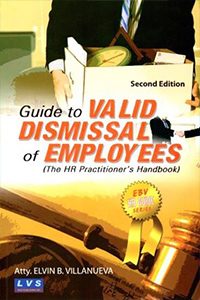 Rights of the employer and the employee: Is it a zero-sum situation?
Dismissal is valid when the employer has the just cause or authorized cause for termination.
Dismissal may be valid if the employee dismissed committed, for instance theft, falsification, insubordination, etc. Likewise, termination may be effected because the employee’s position is redundant or the company has losses and it needs to retrench employees.
It is duly recognized that the employer has rights to pursue everything in its power to run its business profitably. It has to earn as well to keep on doing business.
Such pursuit may constitute business decisions that could involve exercise of management prerogative such as transfer of employees and even removal or termination. That is where the conflict with the rights of employee begins.
As mentioned earlier, the employee has his own rights, which the law vigorously protects. His right against illegal dismissal is anchored on his security of tenure. Hence, the right of employee serves as a limitation on the management prerogative of the employer to dismiss an employee.
However, the law provides important guidelines, rules and mechanics on how should employers go about the enforcement of its disciplinary measures.
The sources of the authority on valid dismissal are the Labor Code, Supreme Court decisions (jurisprudence), pertinent labor laws and implementing rules and regula tions of the Department of Labor and Employment (DOLE).
In the next post, the rights of the employer, known as the management prerogative will be discussed.
Get a re-numbered copy of the Labor Code (2017 Edition)
Comments (26)
… [Trackback]
[…] Find More on that Topic: lvsbooks.com/rights-employee-vs-rights-employer/ […]
… [Trackback]
[…] Information on that Topic: lvsbooks.com/rights-employee-vs-rights-employer/ […]
… [Trackback]
[…] Find More Information here on that Topic: lvsbooks.com/rights-employee-vs-rights-employer/ […]
… [Trackback]
[…] Find More on to that Topic: lvsbooks.com/rights-employee-vs-rights-employer/ […]
… [Trackback]
[…] Read More Info here to that Topic: lvsbooks.com/rights-employee-vs-rights-employer/ […]
… [Trackback]
[…] Read More Information here to that Topic: lvsbooks.com/rights-employee-vs-rights-employer/ […]
… [Trackback]
[…] Information to that Topic: lvsbooks.com/rights-employee-vs-rights-employer/ […]
… [Trackback]
[…] Information on that Topic: lvsbooks.com/rights-employee-vs-rights-employer/ […]
… [Trackback]
[…] Find More to that Topic: lvsbooks.com/rights-employee-vs-rights-employer/ […]
… [Trackback]
[…] There you can find 85839 more Information on that Topic: lvsbooks.com/rights-employee-vs-rights-employer/ […]
… [Trackback]
[…] There you will find 26106 additional Information on that Topic: lvsbooks.com/rights-employee-vs-rights-employer/ […]
… [Trackback]
[…] Information on that Topic: lvsbooks.com/rights-employee-vs-rights-employer/ […]
… [Trackback]
[…] Find More Info here to that Topic: lvsbooks.com/rights-employee-vs-rights-employer/ […]
… [Trackback]
[…] There you will find 36702 additional Info on that Topic: lvsbooks.com/rights-employee-vs-rights-employer/ […]
… [Trackback]
[…] Read More to that Topic: lvsbooks.com/rights-employee-vs-rights-employer/ […]
… [Trackback]
[…] There you can find 11192 more Information to that Topic: lvsbooks.com/rights-employee-vs-rights-employer/ […]
… [Trackback]
[…] Find More on to that Topic: lvsbooks.com/rights-employee-vs-rights-employer/ […]
… [Trackback]
[…] Read More Information here to that Topic: lvsbooks.com/rights-employee-vs-rights-employer/ […]
… [Trackback]
[…] Find More to that Topic: lvsbooks.com/rights-employee-vs-rights-employer/ […]
… [Trackback]
[…] Info on that Topic: lvsbooks.com/rights-employee-vs-rights-employer/ […]
… [Trackback]
[…] Read More on that Topic: lvsbooks.com/rights-employee-vs-rights-employer/ […]
… [Trackback]
[…] Read More Info here on that Topic: lvsbooks.com/rights-employee-vs-rights-employer/ […]
… [Trackback]
[…] Information to that Topic: lvsbooks.com/rights-employee-vs-rights-employer/ […]
… [Trackback]
[…] Read More Info here to that Topic: lvsbooks.com/rights-employee-vs-rights-employer/ […]
… [Trackback]
[…] Find More on to that Topic: lvsbooks.com/rights-employee-vs-rights-employer/ […]
… [Trackback]
[…] There you will find 72042 additional Information on that Topic: lvsbooks.com/rights-employee-vs-rights-employer/ […]
Comments are closed.